A week of crisis management, from Iran to Ukraine to the Gulf, while voters in Serbia and Brazil delivered their verdicts. Qatar handed Tehran a new draft deal, but the gaps remain wide, and regional powers are trying to build a framework that lowers the risk of another round. In Ukraine, a local truce took effect in Oleshky, in the Kherson region, while fighting continues at high intensity along the rest of the front. Meanwhile, the Iranian and Houthi threat is being felt more sharply at embassies, in shipping lanes and across energy infrastructure, and the US–China economic contest is gradually moving from export controls to restrictions on capital and investment.
This week on the map
Drag to rotate the globe
Item in this issueDiplomatic or security linkStrikeThreat
Places and links covered in this issue. Tap a number to jump to the item.
Earth imagery: NASA Blue Marble · Boundaries: Natural Earth (public domain)
Qatar delivered to Tehran a new draft settlement to end the war with the United States and Israel, built around a seven-day timeline of step-by-step confidence-building measures, with several countries acting as guarantors. A senior Iranian official said the ideas presented were unacceptable and did not amount to a real offer, but according to an official briefed on the talks, Iran is expected to respond by the end of this week. The move follows visits to Tehran by envoys from Qatar, Saudi Arabia, Pakistan and Turkey, and shows that the effort to head off further escalation now runs through a broader regional framework, not only the Washington–Tehran channel.
A six-day local ceasefire, brokered by the United States, took effect on October 27 in the town of Oleshky in the Kherson region, to allow aid deliveries and the evacuation of residents. As of the latest update, both sides said they were observing the truce, and no significant violations had been reported. Outside the truce zone, fighting continues at high intensity, including missile strikes on Kyiv. Zelensky expects the trilateral talks in Abu Dhabi to take place in the first half of November, though no final date has been set, and the Kremlin has made clear the Europeans will not take part.
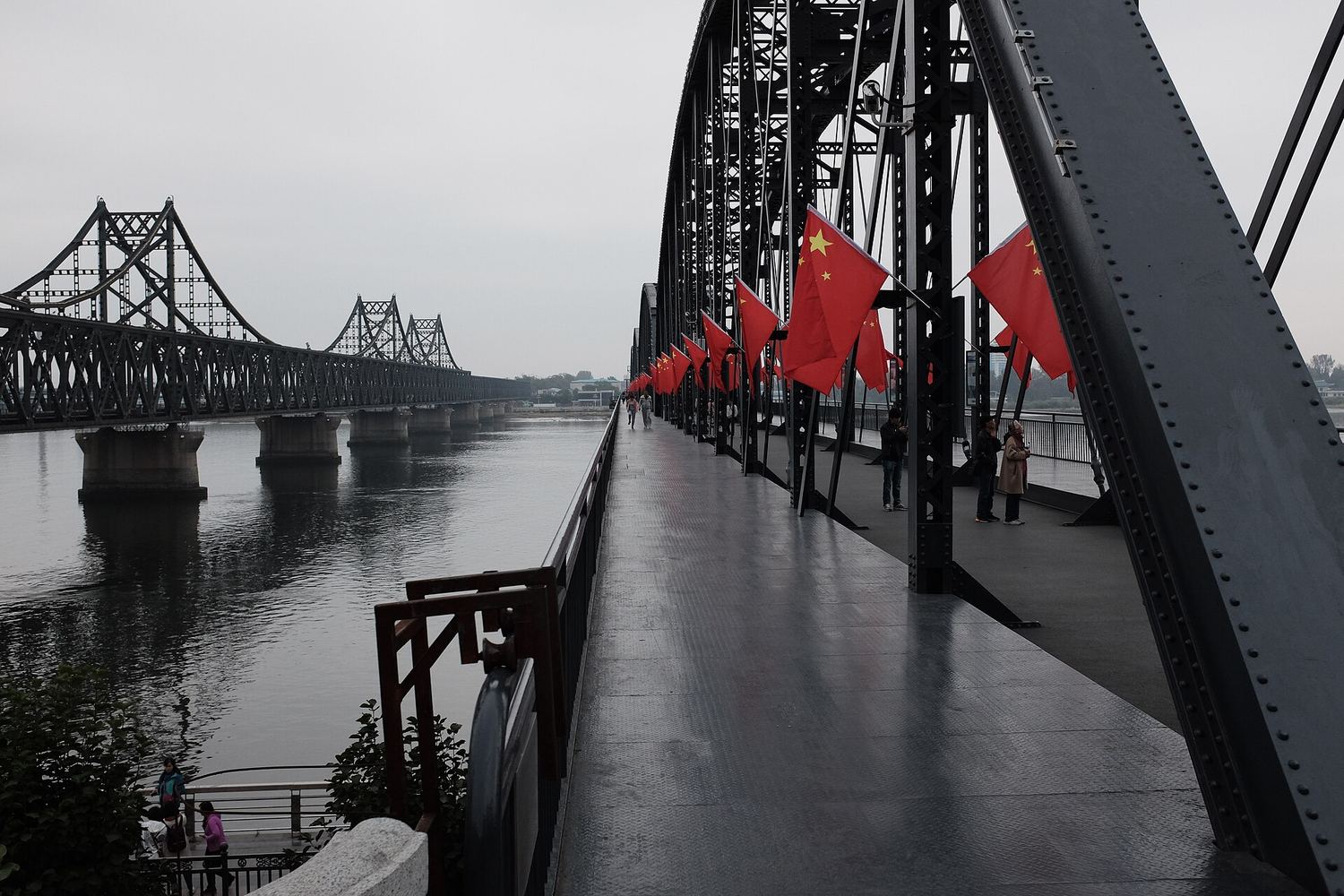
Kim Jong Un crossed the new bridge over the Yalu River into the Chinese city of Dandong, where he met Wang Huning, a senior member of the Communist Party leadership, who conveyed Xi’s greetings. Beijing presented the bridge’s opening as a step toward expanding trade with North Korea. The visit and the new trade route strengthen economic ties between the two countries and give Pyongyang deeper strategic backing at a time of rising regional tension.
The Houthis claimed a missile strike on Ras Tanura, Saudi Arabia’s largest refinery, though Riyadh has not confirmed the hit. On October 28, the Houthis also struck the airport in Aden after warning civilians to leave the area, as fighting in southern Yemen expands. Meanwhile, Egypt’s parliament approved the mandate President Sisi needs to help defend Saudi Arabia. The mandate is limited to defense and does not include ground troops in Yemen, bringing Cairo into the defensive coalition taking shape around Riyadh, alongside Britain, Turkey and Pakistan.
The State Department is drawing down staff at US embassies in Jordan, Lebanon, Qatar and the UAE, following intelligence on Iranian plans targeting American personnel. In Britain, two London residents were charged over an alleged Iran-linked plan at RAF Fairford, a base used by US bombers. Iran denies any involvement.
Three gunmen opened fire at a funeral in a Greek Orthodox church in Karak province, killing nine people. The suspects were arrested after an exchange of fire. Jordan then carried out airstrikes on targets in southern Syria that it said were used by terrorist groups linked to the suspects. Syria said seven people were killed in the strikes, including children and a woman, and claimed there had been no full advance coordination; Jordan said the operation was carried out in coordination with Damascus. The episode shows how much the Syrian arena still shapes the internal security of its neighbors.
A drone struck and sank the cargo ship Khoryv about 13 nautical miles east of Constanța, just outside Romanian territorial waters. One crew member was killed and three are missing. On October 28, the container ship CONTSHIP JET was hit by three sea drones in Bulgaria’s exclusive economic zone; all 18 crew members were rescued. The attacker in that case has not been identified. Bulgaria, Romania and Turkey are setting up a coordination mechanism for information-sharing and early warning, and Turkey called on Russia and Ukraine to stop attacking commercial vessels. The string of incidents brings the war closer to trade routes and to the coastlines of NATO members.
The Treasury Department published draft rules expanding restrictions on investment by Americans in Chinese companies working in sensitive technologies. In certain fields, including artificial intelligence, quantum, supercomputing, semiconductors and hypersonics, investments will either have to be reported or will be banned outright. Having limited China’s ability to buy American chips and technology, Washington now aims to shrink the American money that could help develop them as well. Beijing objected to the move and said it reserves the right to take countermeasures.
Brent crude rose to about $115 a barrel on October 28, driven by the fighting in Yemen and fears of further damage to Saudi energy infrastructure. The same day, the World Bank published a forecast that commodity prices will rise 23% this year and energy prices 32%, driven in part by the war in the Middle East and trade disruptions. After a period in which the economic center of gravity shifted to tariffs and the tech war, energy prices are once again a central driver of inflationary pressure and of decision-making in Washington and Europe.
According to preliminary results, the Student List, which grew out of the protest wave, won about 52.7% of the vote, against about 39.2% for Vučić’s list. Vučić conceded on election night. The win came in a week when protests over living costs and against governments also continued in France, Italy, Belgium, Portugal and Albania. The political system has now moved on to forming a government, but as of October 28, no one had been named prime minister or to other key posts. The result weakens the forces that kept close ties with Moscow for years and reopens the debate over Serbia’s European direction.
Lula defeated Flávio Bolsonaro in the runoff with 51.79% of the vote against 48.21%. Bolsonaro’s party has accepted the result, but he himself refuses to. After failing to surrender his passports as ordered by the Supreme Court, he left Brazil for the United States, and on October 28 declared, without presenting evidence, that he is the “legitimate president-elect.” Trump said he supports his arrival in the United States, and his administration announced that Bolsonaro and his family will receive entry visas. Lula is now preparing for another term facing a Congress that leans further right and strained relations with Washington.
BrasíliaWashington
By the numbers
$115
Brent per barrel on October 28, amid the fighting in Yemen
The Sino-Korean Friendship Bridge over the Yalu River, linking Dandong in China with Sinuiju in North Korea. Beside it stand the remains of the old bridge, bombed in the Korean War in 1950 and left ending mid-river. This week Kim Jong Un crossed the river on a newer bridge on his way to Dandong.File photo (2016): Jan Bockaert · CC BY-SA 2.0 · via Wikimedia Commons · Source · License