US voters sharply changed the political balance in Washington this week, handing Democrats control of both chambers of Congress as frustration over living costs and the Iran war shaped the midterms. At the same time, the United States set November 10–11 for trilateral talks with Russia and Ukraine in Abu Dhabi, even as Moscow struck Ukraine’s power grid ahead of the meeting. Qatar’s mediation between Washington and Tehran continues without a breakthrough, while the US carried out a limited strike on Iran’s Qeshm Island. In Yemen, Houthi forces advanced to within roughly 80 kilometers of Aden; in the Black Sea, a container ship sank after a sea-drone attack; and oil prices fell sharply as markets judged the risk of further escalation with Iran to be lower.
This week on the map
Drag to rotate the globe
The interactive map is available in the online version.
Item in this issueDiplomatic or security linkStrikeThreat
Places and links covered in this issue. Tap a number to jump to the item.
Earth imagery: NASA Blue Marble · Boundaries: Natural Earth (public domain)
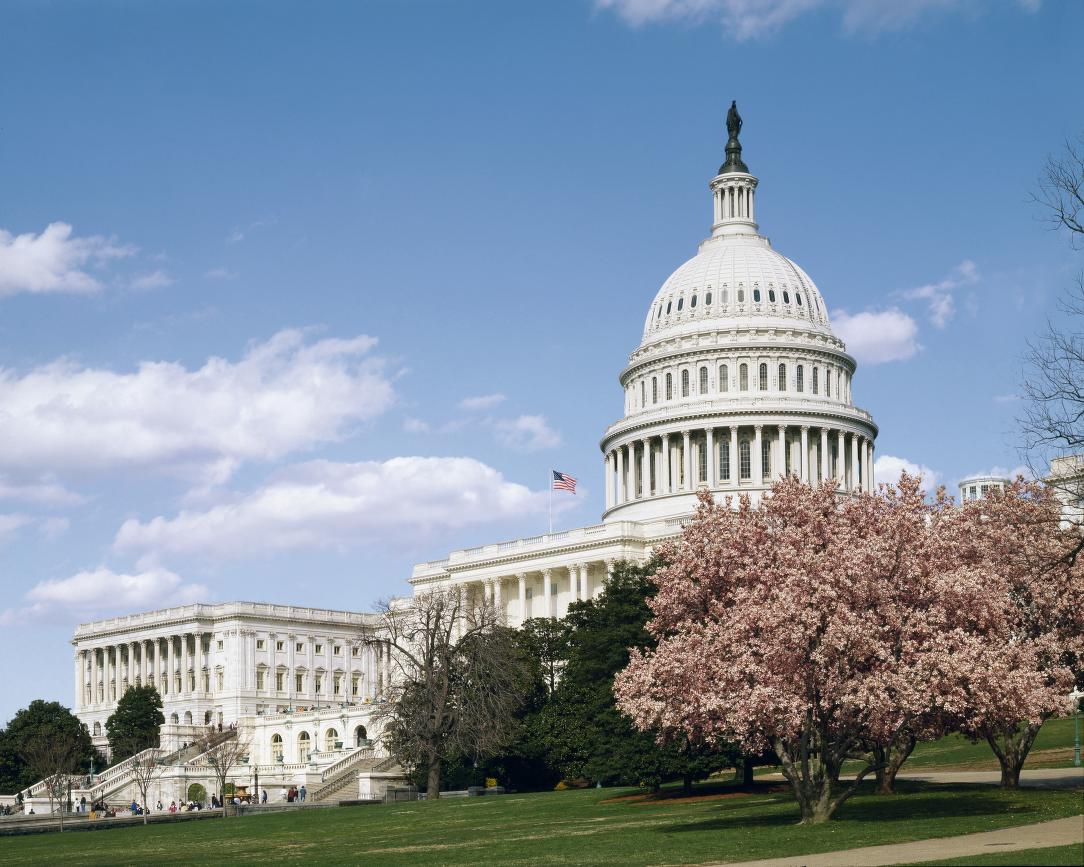
Democrats won control of both the Senate and the House in the midterm elections, including victories in states long considered Republican strongholds. The result reflected, among other factors, voter frustration over living costs and the war with Iran. Trump acknowledged that the war contributed to the losses, while Vice President JD Vance sharply criticized its political cost. Control of Congress gives Democrats stronger budget, legislative and investigative tools to scrutinize the Iran campaign, revive support for Ukraine and constrain parts of the administration’s agenda.
The United States will bring Russian and Ukrainian delegations to Abu Dhabi for talks on ending the war, postwar security arrangements, de-escalation and humanitarian measures. Steve Witkoff and Jared Kushner are expected to lead the US side, and the Kremlin has confirmed that Russia will take part. It will be the first direct US-mediated track of this kind since February, before the war with Iran began, but the gaps between Moscow and Kyiv remain wide.
Qatar continues to mediate between Tehran and Washington, but a senior Iranian official said the two sides remain far apart. Iran is conditioning a full reopening of the Strait of Hormuz on relief from oil sanctions, an end to the naval blockade and the release of frozen funds, and says it will not open nuclear talks before those conditions are addressed. Both sides are still reviewing mediation proposals, but there has been no breakthrough.
The United States struck targets on Iran’s Qeshm Island in the Strait of Hormuz on November 2. US officials described the operation as a limited defensive action against Iranian surface-to-air systems used against American assets, rather than a return to a broad campaign. Iranian media reported explosions on the island. Trump said he remains prepared for wider action if needed, while Washington is still keeping the diplomatic channel open.
Russia launched hundreds of drones and dozens of missiles at power plants and substations across Ukraine, causing outages in Kyiv and several other regions. Days earlier, dozens were killed when a Russian strike hit a school being used to distribute aid in the Zaporizhzhia region. Ukraine, in turn, reported a strike on a refinery in Yaroslavl. With the Abu Dhabi meeting only days away, the attacks underline that diplomacy is restarting while the war continues at high intensity.
Houthi forces have advanced to about 80 kilometers from Aden, their closest approach to the city since 2015, and are fighting around a military camp near the entrance to Tur al-Bahah. They captured Al-Maqatirah district and are threatening the road linking Aden and Taiz. Taiz has been largely encircled for about a month, and fighting has displaced more than 100,000 people in the area. The advance increases the pressure on southern Yemen and on routes near the Bab al-Mandab strait.
Turkey’s parliament is preparing to ratify the mutual-defense agreement with Saudi Arabia and Pakistan, which includes a collective-defense clause under which an attack on one would be treated as an attack on all. Ratification would create a defense commitment but would not itself deploy Turkish forces; any such deployment would require a separate mandate. For now, Ankara’s expected contribution is focused on equipment, intelligence, weapons systems and air defense, against the backdrop of Houthi pressure on Saudi Arabia and stalled diplomacy with Iran.
The container ship Contship Jet, sailing from Haifa to Constanța with 421 containers, was hit by three sea drones in Bulgaria’s exclusive economic zone and later sank. All 18 crew members were rescued. The attacker has not been conclusively identified, and Russia denies involvement. The incident follows a series of attacks on commercial shipping near the Bulgarian and Romanian coasts and shows how the war in Ukraine is increasingly spilling into civilian maritime traffic close to NATO territory.
Ethiopia closed Sudan’s consulate in Assosa and ordered six Sudanese diplomats to leave. Sudan responded by closing Ethiopia’s consulate in Gedaref and expelling its staff. Khartoum accuses Ethiopia of allowing the Rapid Support Forces to use Ethiopian territory to launch drones, while Addis Ababa accuses Sudan of supporting rebels in Tigray. Both governments deny the allegations, but the diplomatic rupture raises the risk that the conflicts in Sudan and Ethiopia could become more directly entangled across the Horn of Africa.
Brent crude fell to $93.82 a barrel on Thursday, extending a four-day decline after dropping more than 8% in the previous session. Markets judged that Democratic control of Congress could make a further expansion of the Iran war more difficult and increase pressure for a deal. At the same time, oil shipments through the Strait of Hormuz have nearly returned to prewar levels, albeit at higher cost, while the global market has shifted back into surplus. After Brent traded around $115 only a week ago, the market has moved rapidly from fear of shortage toward expectations of lower geopolitical risk.
Poland’s dispute over the Constitutional Tribunal, rooted in contested judicial appointments dating back to 2015, intensified when senior judge Anna Korwin-Piotrowska suspended tribunal president Bogdan Święczkowski and assumed control of the institution. President Karol Nawrocki called the move an unlawful takeover, while Prime Minister Donald Tusk presents the changes as part of an effort to restore judicial independence and public trust. The underlying problem is that both camps dispute appointments made by the other: the current government and parliament reject some judges appointed under Law and Justice, while the president and tribunal leadership refuse to accept some nominees chosen by the present majority. The fight is therefore not only over who leads the court, but over who has the authority to rebuild an institution whose independence has previously been criticized by the European Union, a year before parliamentary elections.
A Hong Kong court sentenced activist Joshua Wong to 10 years in prison after he pleaded guilty to conspiracy to collude with foreign entities under the national security law. Prosecutors accused him of efforts to promote sanctions and international pressure on Hong Kong and China. The sentence is among the harshest imposed on one of the best-known figures of the protest movement and underscores the continued narrowing of the city’s political space.
The U.S. Capitol in Washington. This week, voters handed Democrats control of both chambers of Congress.Photo: Carol M. Highsmith / Library of Congress. Public domain. · Image source